



Is coconut a nut? Or fruit? Or a seed? This article has the definitive facts about coconuts. And the answer may surprise you.
Is coconut a nut or a fruit? Or a seed?
It’s classified as a type of fruit called a drupe. But they can loosely be called all three!
What is a drupe?
Drupes are fleshy fruit that contain a seed such as nectarines, olives, peaches plums or cherries. [Source] However, even raspberries and blackberries are considered a type of drupe as well. Coconuts are specifically a one-seeded drupe which is a fruit with a hard shell covering the seed. [Source]
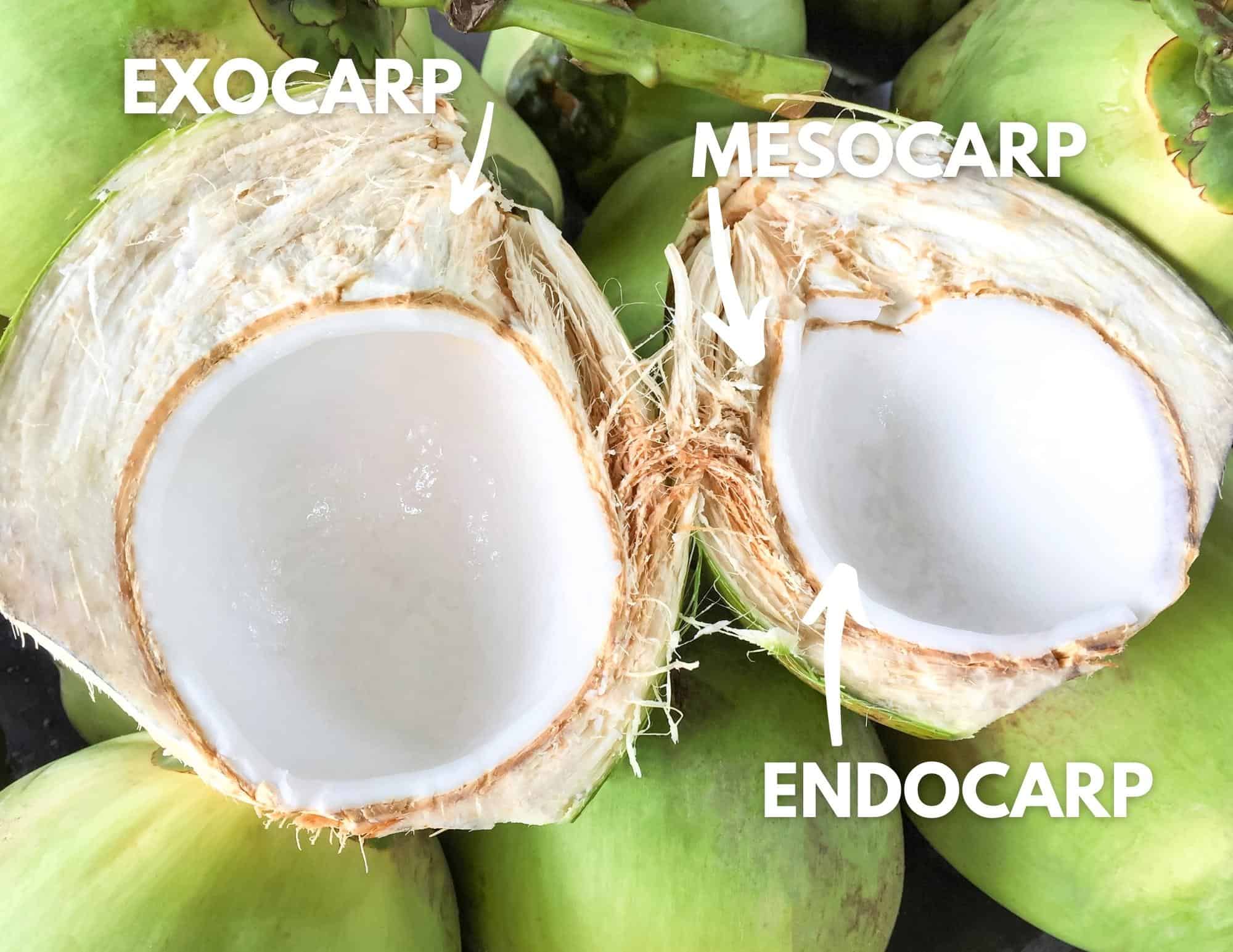
All drupes have an exocarp (outer layer), mesocarp (fleshly middle) and endocarp (fleshy layer that surrounds the seed). [Source]
Why are coconuts fruit?
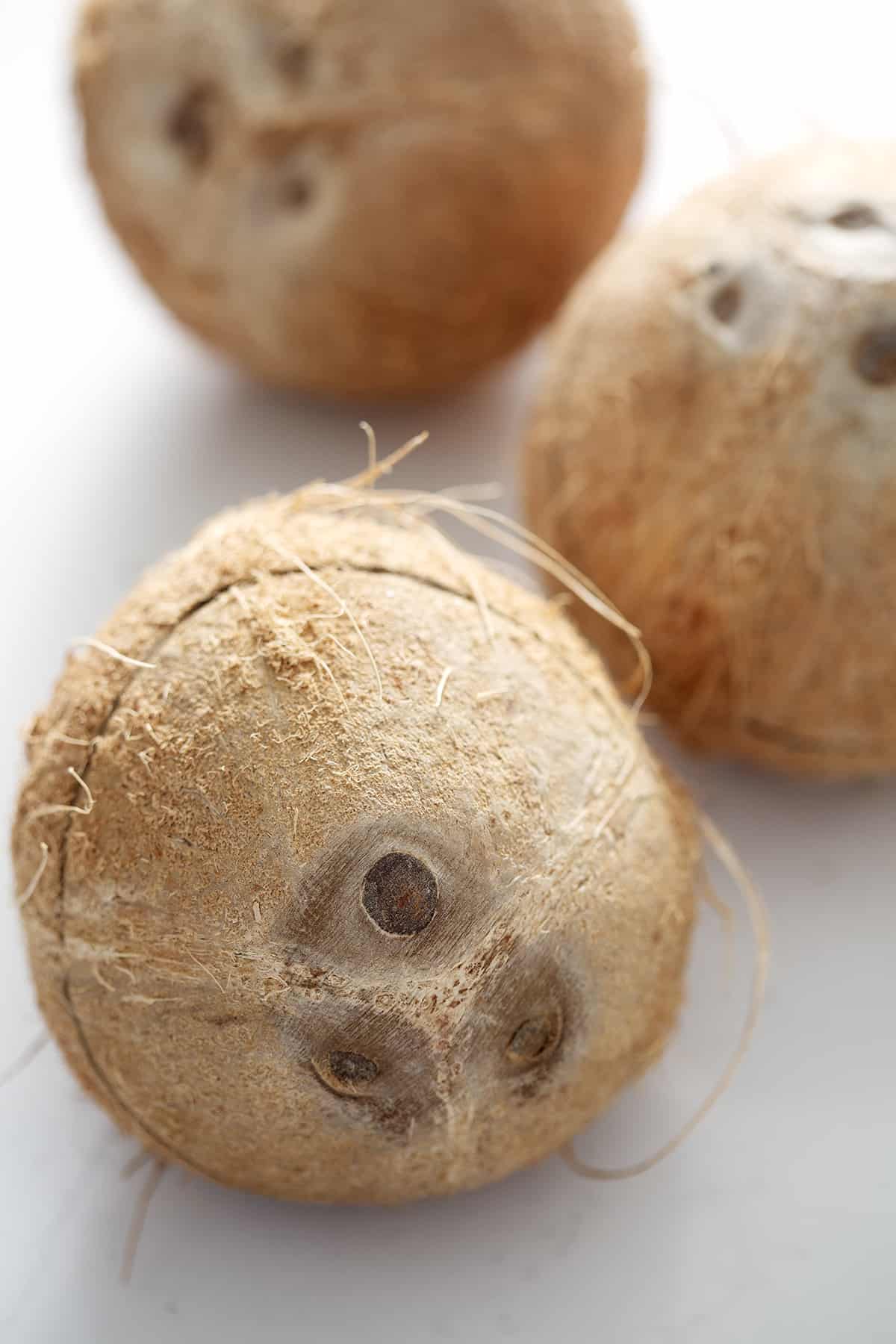
Coconut is technically classified as a drupe. And drupes have seeds or pits, but they don’t seem like nectarines or peaches or plums. So, if you are confused about how they are considered drupes, I completely understand. When we see coconuts in stores, we usually see the dried outer shell. There’s the coconut water/coconut meat inside but no seed. In this instance, if you look at the outside of the coconut, you’ll see the three pores. The seed shoots from those pores. Drupes also have endosperm which in the case of coconut, is the meaty white flesh. What you don’t normally see at the grocery store is the endocarp. That’s the smooth green layer which has already been removed.
How are nuts classified?
To make matters even more confusing, nuts are also a type of fruit. However, they don’t have protective outer layers like drupes. They do have a hard shell that opens to release a seed. Certain types of drupes and nuts can be classified as tree nuts such as walnuts.
Why would coconut be considered a seed?
If you are looking at the entire coconut palm tree (even though a coconut tree is technically not a tree either but that's another confusing topic), the coconut is considered the seed of the plant. Therefore, coconut could be considered a seed. [Source]
Why is coconut called a nut?
Nut is in the name, coconut, so it’s easy to assume that coconut is a nut. Additionally, certain drupes like coconut, can also be called nuts because they may have cross reactivity with other nuts such as macadamia nuts. [Source]
The Food and Drug Administration (FDA) changed the classification of coconut to tree nut in 2006. And in a nutshell (pun totally intended), the FDA’s classification is broad while botanist classification is specific and complex.
Here is the List of Tree Nuts According to the FDA
- Almond
- Beech Nut
- Brazil Nut
- Butternut
- Cashew
- Chestnut (Chinese American, European, Seguin)
- Chinquapin
- Coconut
- Filbert/Hazelnut
- Ginko Nut
- Lichee Nut
- Macadamia Nut/Bush Nut
- Pecan
- Pine Nut/Pinon Nut
- Pili Nut
- Pistachio
- Sheanut
- Walnut (English, Persian, Black, Japanese, California)
If I have a tree nut allergy, can I eat coconut?
The best answer is, ask your doctor. I’m not a doctor and can’t advise you on your specific health needs or concerns. However, most people with nut allergies don’t have a coconut allergy. [Source]
Additionally, allergies aren’t the only thing to look out for when consuming coconut products. Regardless of the health benefits [source], you can have non-allergic reactions which would be considered a coconut intolerance.
Is coconut allowed in nut free schools?
If a school is following the guidelines set out by the FDA, then no. Coconut is considered a nut and shouldn’t be brought into that nut free school. But just to be safe, it’s best to ask your school for their specific guidelines. Better safe than sorry. Foods allergies aren’t fun and I wouldn’t want to put anyone in danger.
If you’re gluten free, it’s difficult to be nut free as well. Almond flour, coconut flour and other nut flours are used frequently as wheat flour substitutes. Please be aware of this and check ingredients before making purchases. Here is a list of nut and coconut free recipes.
Interesting Facts About Coconut
- Coconut is sometimes referred to as the ‘tree of life’ because every part of it can be used for food, musical instruments, drink, etc. [Source]
- It takes about a year for coconut to mature. [Source]
- A coconut was taken into police custody in the Maldives in 2013 because they believed it to be cursed with black magic. [Source]
- Coconut water was used intravenously during World War II when saline solution was in short supply. [Source]
- Coconut in some forms are anti-viral, anti-fungal, anti-bacterial and anti-parasitic. [Source 1] [Source 2]
If you’re looking for recipes using coconuts, try these!
- Coconut Matcha Panna Cotta
- AIP Coconut Milk Matcha Latte
- AIP Coconut Milk Curry Soup
- Vietnamese Tapioca Pudding (che chuoi chung)
- Zombie Brain Dessert
- AIP Live Pate
- Dairy Free Tzatziki
- Super Easy Dutch Oven Chicken Pot Pie without Crust (AIP, Gluten Free)
Love reading this post? You can also FOLLOW ME on FACEBOOK, INSTAGRAM and PINTEREST to see more resources, delicious food and what I’m up to.
Did you enjoy this post? I love hearing your thoughts on my posts so please rate and comment below.
Leave a Reply